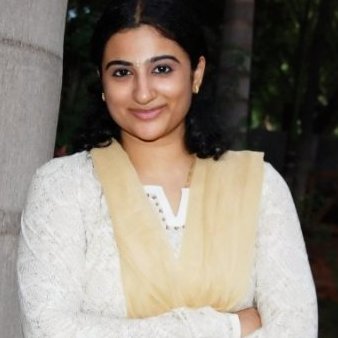
Kamala Thiagarajan is an independent journalist based in Madurai, India. She reports on a wide range of science, environmental and global health issues for media outlets like Al Jazeera, the BBC, The Guardian, HAKAI Magazine, The New York Times, South China Morning Post, and The Wire. She was recently awarded a grant from the Pulitzer Centre for her reporting on women seaweed divers in India’s Gulf of Mannar.
*****
AB: I would like to begin with a confession that, I think, journalists do not hear often enough: I am a big fan of your work! You have over twenty years of experience as a freelance journalist and have written for some of the most reputable media outlets out there, including Al Jazeera, the BBC, the British Medical Journal, The Guardian, HAKAI Magazine, NPR, The New York Times, South China Morning Post, The Wire. Your contributions are not only well-researched, but also beautifully crafted pieces of writing. How did you train to become a journalist and what do you think are the most important qualities a journalist should possess?
KT: That’s so sweet! Thank you very much, I deeply appreciate the kind words.
I worked part-time as a stringer for my local newspapers even before I graduated with a degree in English literature back in ‘99. Those couple of years when I juggled the coursework of an undergraduate degree with deadlines for my journalism projects were very busy and I met the most incredible people. I covered everything from bomb blasts to interviews with pop stars who had landed in my neighbourhood. It helped hone my skills with a wide variety of reporting and I learnt so much outside of a book that I think is invaluable. I think some of the most important qualities a journalist should have are empathy and curiosity.
AB: Much of your reporting revolves around science and pressing environmental and global health concerns. India has a long history of science journalism—nineteenth-century newspapers regularly covered scientific topics, the Indian Science News Association celebrated its 85th anniversary in 2020—but what does it mean to be a science and environmental journalist in India today? What challenges have you encountered along the way, especially as a woman journalist? How have things changed over the past two decades?
KT: I think it’s an incredibly challenging role and one vested with a lot of responsibility. As a science journalist in an India that is changing so dramatically, both in terms of its climate and economic growth, I often feel like someone sitting on the sidelines of history, observing breath-taking change. There is a need to document that change faithfully. There are many challenges that women journalists face on the field today, not least of which is sexism. In patriarchal India, challenges to science reporting involve centering female voices in science (who may be on the fringes of a project, but are doing the hard work and are seldom seen), getting past male gate keepers in organizations who often look questionably on women reporters. Even scientists have some amount of bias, so a female science reporter has to work harder to make those connections and establish credibility. However, things are getting better. It’s not as hostile a terrain for women as it used to be. Over the last two decades science reporting has become easier too. From absolutely no documentation of any process in the past, India is getting better at collating data and using that data to inform and drive policy, although we have a long way to go yet.
AB: You are based in Madurai, a major city in south India many of your international readers might not be familiar with. How do you choose the topics you report on and how do your audiences respond to them? Hyperlocal news used to belong in the pages of (hyper)local newspapers, but it seems to me that your journalism has been successfully challenging that notion.
KT: Madurai is the third largest city in the state that I live in, Tamil Nadu. But in India, journalism was primarily driven by the news that flowed from its major cities. This meant that we heard a lot from the glittering nerve centers of Delhi, Mumbai, Chennai, Bengaluru and very little from other towns and cities across the country. I noticed this gap in coverage when I first moved here. In fact, people in the industry actively encouraged me not to move away from a major city so early on in my career to what they saw as the boondocks. One even said, make the move and your career is over. However, twenty years later, I’m still around and my work, thankfully, is still relevant. All around me, I found people doing fascinating, courageous things, and I was fortunate to be able to tell their stories. Since the national press wasn’t interested, I approached the international press. My premise of selling hyperlocal stories to an international press was that we share a human experience. If the characters are strong enough, the stories will be of interest no matter where you live. Hyperlocal news does have the ability to jump boundaries like never before, to be more relevant to a wider audience, and its lessons more universal.
AB: How do you research your articles? I particularly enjoyed the balanced and nuanced approach to reporting you take, which often incorporates a variety of voices and opinions. Your recent piece ‘Seeing the River for the Fish’ (BioGraphic, 11 March 2022) featured insights from both professional scientists and locals; admittedly, it is not always easy to approach the corporations that are responsible for environmental damage.
KT: So glad you liked that one. I worked on it for several months. Science publications often have a painstaking fact checking, editing and annotation process, which I think only strengthens one’s reporting. I think of a story as a giant jigsaw and begin my research in bite-size pieces. I first contact the main players, the people who are movers and shakers and so are integral to the storyline. Then, I reach out to potentially hidden voices. People whom you may not expect to populate a science story, but who are nevertheless inextricably connected with it and tend to be historically sidelined, like tribal people with a wealth of local wisdom and a knack for conservation. Finding these sources can take time and often more effort. Finally, I trawl government websites and published studies for data. Numbers clearly speak and tell their own stories, and sometimes those stories are startling. You’re right about corporations not taking responsibility for environmental damage. They tend to have strong legal teams.
I work in small spurts and my main focus lies in contacting as many diverse voices as possible. It’s like a jigsaw puzzle—I get it done bit by bit but remember the sheer joy when it all comes together.
AB: One problem that often crops up in science and environmental journalism is how to handle conflicting reports and scientific uncertainty. What are your strategies for dealing with this issue? I am thinking here, for example, of your extensive coverage of the Covid-19 pandemic.
KT: Covid was a humbling subject to report on—it taught me that even experts can be wrong, that science that we believe to be absolute can have its loopholes. Consensus is difficult to achieve and yet, communication was vital in these circumstances. And then there was pseudo-science which was quite overwhelming. There’s one journalism lesson that I learnt during these difficult years—report on the information that you have on hand today. Grounding your reporting in the present (based on the facts we currently have) is vital, because that knowledge can often mean the difference between life and death for someone. Goalposts may change depending on new research, so you really need to be on your toes to update your information.
AB: Journalists are in a position to ‘translate’ scientific research for wider audiences, but not all scientists welcome such mediatization/mediation, for example because of the danger that their research is misrepresented or distorted. What have been your experiences in this regard?
KT: Most researchers would welcome it; if they are wary, they may have had a bad experience with a journalist in the past. I completely understand how frustrating it can be for the researcher to see their life’s work misinterpreted. Mistakes can happen, no matter how experienced you are. It helps if you record conversations, and the publication has an adequate fact-checker (so few do these days!). So my rule of thumb is to become my own fact-checker if the publication doesn’t have one. I never rush through these interviews and I check facts (via a phone call or an email) with regard to the key issues we are discussing. I think this does them the courtesy of handling their research carefully and I also owe it to my reader to present accurate facts, so it is a win-win.
AB: What role do images play in science journalism? How effective are words as opposed to sound and (moving) images in this type of reporting?
KT: Images play a powerful role in science journalism, helping us connect instantly to our audiences and sometimes to just communicate the breath-taking potential of science. But words have an even deeper role. They can paint those images in your mind and make them even more powerful and lasting.
AB: Media reports on the environment, especially the climate crisis, often make for a disheartening, if not frightening, read. This may end up being counterproductive—some people might avoid such news to protect their mental health; others are paralyzed into inaction, feeling that they might not be able to change much anyway. Your writing on the environment strikes me as being very honest about the challenges we are currently facing yet at the same time hopeful. You show that people are not only destroying, but also actively working to save the planet. Can journalism be a ‘method of hope’? I am borrowing this term from Hirokazu Miyazaki’s ethnographic account of Fijian society, now itself battling the effects of climate change, in which he discusses hope as both a means of creating knowledge and a catalyst for change.
KT: I absolutely think that journalism has that potential to not just be a beacon of hope, but to drive solid change and inform policy. Many newsrooms are veering away from scaremongering in their reporting because as you rightly said, it’s not the right tool to create change. While reporting should never shy away from the facts, it should incorporate a solutions element—I always try to look at people attempting to solve the problem as much as shine a light on those factors that have driven it. Not all problems have solutions, of course, but we owe it to our readers to report extensively on the ones that do.
 AMELIA BONEA